







May 2026
There are two fundamentally different phases in retirement planning.
The first is accumulation. Save consistently. Invest for growth. Stay the course through market volatility. Let compounding work over decades. This is the phase most financial advisors are primarily trained for, and the one most Americans have spent their working lives focused on.
The second phase is distribution. Turn savings into reliable income. Sequence withdrawals thoughtfully to manage tax exposure. Time Social Security in a way that coordinates with other income sources. Manage withdrawal timing in the context of market conditions. Make savings last through a retirement that could span 20 to 30 years or more.
These two phases require different strategies. Different planning considerations. Different questions. And often, an adviser with a different area of specialization.
The challenge is that most people approaching retirement have spent decades working with an adviser focused on the accumulation phase. The distribution phase requires a different kind of planning — and many people are entering it without one.
According to a 2024 survey by IRALOGIX, nearly half of all retirees have no formal withdrawal strategy — choosing instead to withdraw funds as needs arise with no coordinated plan for taxes, sequencing, inflation, or longevity. Of those surveyed, 46% said their 401(k) provider offered minimal or no guidance on how to manage distributions as they approached retirement.
To make sure your retirement income strategy is built for the distribution phase, we recommend you take our AdviserMatch quiz today.
Quick Navigation
Here is what many people approaching retirement have never been told
4 Ways an Accumulation-Focused Strategy May Not Serve You in Distribution
The shift from accumulation to distribution is one of the most consequential transitions in a person's financial life. Many people make it without fully understanding that the planning approach that served them during their working years may need to be significantly reconsidered.

1. Portfolio Positioning Appropriate for Accumulation May Not Be Appropriate for Distribution
During accumulation, time horizon is long and periodic market downturns can often be absorbed without disrupting long-term goals. Contributions continue, and the portfolio has time to recover.
In distribution, the dynamic is different. When withdrawals are being made from a portfolio during periods of market decline, assets are being sold at lower prices to fund living expenses. This is commonly referred to as sequence of returns risk — the risk that the timing of withdrawals relative to market performance can significantly affect how long a portfolio lasts. According to Fidelity Investments, negative returns early in retirement can be more consequential than the same returns experienced later, because there are fewer years for the portfolio to potentially recover.
A portfolio positioned for long-term accumulation may carry a different risk profile than is appropriate for the distribution phase. This is a conversation many people have never had with their adviser before retiring. Past performance is not a guarantee of future results.


2. The Order of Withdrawals Has Significant Tax Implications
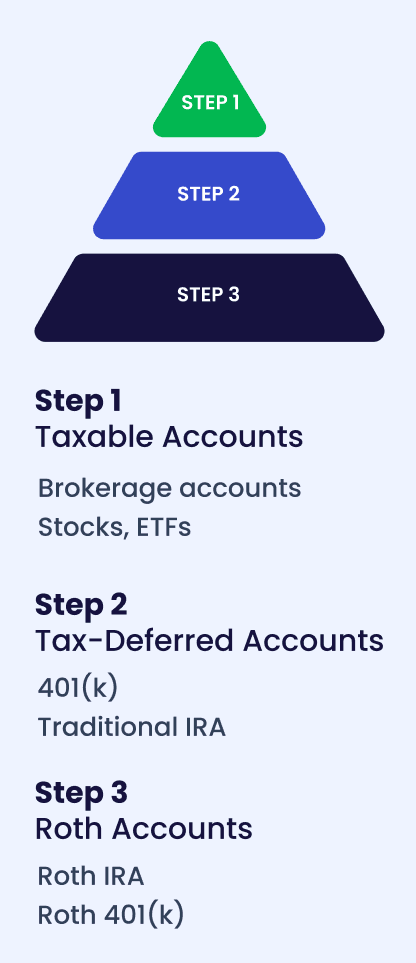
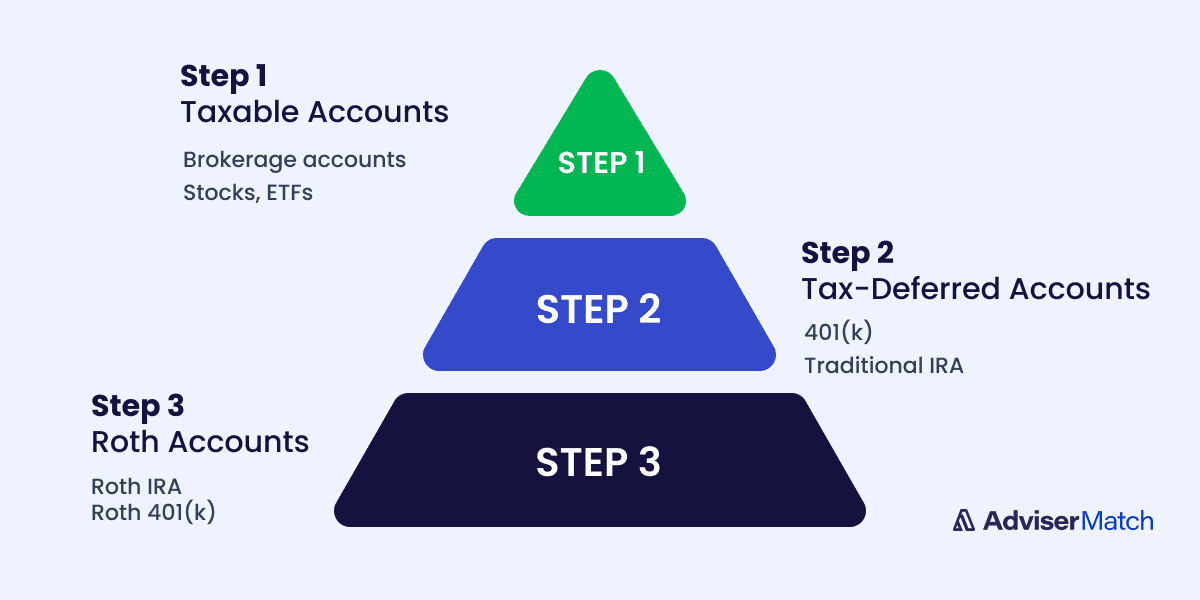
During accumulation, the primary tax consideration is often which type of account to contribute to — whether tax-deferred, Roth, or taxable. The tax planning is relatively straightforward.
In distribution, the question becomes more complex: in what order and proportion should you draw from each type of account to manage your overall tax exposure over a potentially 20 to 30 year retirement?
Without a deliberate withdrawal strategy, required minimum distributions from tax-deferred accounts can push income into higher tax brackets. They can trigger income-related Medicare premium adjustments. They can affect how Social Security benefits are taxed. The interaction between these variables is complex and individual circumstances vary significantly. A qualified tax professional and financial adviser should be consulted to develop a strategy appropriate for your specific situation.
Questions Worth Asking Before You Retire
A retirement income plan addresses a different set of questions than an accumulation plan. Some worth discussing with a qualified financial adviser include:
- In what sequence and proportion should I draw from different account types over my retirement to manage tax exposure?
- How does my Social Security claiming decision interact with required minimum distributions and my overall tax situation?
- How is my portfolio currently positioned relative to the withdrawal timeline I am planning?
- What is my plan for healthcare costs in retirement, and how does it interact with my income strategy?
- How long does my plan need to last, and what assumptions does it make about longevity and inflation?
These questions do not have generic answers. They require analysis of your specific financial situation by a qualified financial adviser experienced in retirement income planning. Individual circumstances vary significantly.
How to Find the Right Adviser for the Distribution Phase
The most relevant question to ask a financial adviser as you approach retirement is not only how they have managed portfolios during the accumulation phase, but whether they have specific expertise in building retirement income strategies — and whether they are equipped to coordinate withdrawals, taxes, Social Security, and income planning as a comprehensive plan rather than a series of separate decisions.
Advisers who specialize in retirement income planning do exist. Finding one before you retire, rather than after, gives you more time and options to build a strategy appropriate for your specific circumstances.

How to Get Started
- Take our free AdviserMatch quiz to get matched with a vetted fiduciary adviser who specializes in retirement income planning for couples.
- Answer a few quick questions today
- Get matched with a vetted fiduciary adviser
- Start building a retirement plan that protects both of you
- The advisers you match with, are legally bound to act in your best interest
Tap Your State to Match With Financial
Advisers Available
Nationwide
Citations
IRALOGIX 2024 Decumulation Survey, Business Wire:https://www.businesswire.com/news/home/20241203762364/en/Nearly-Half-of-Retirees-Lack-a-Structured-Decumulation-Strategy-Raising-Concerns-Over-Rapid-Depletion-of-Savings-IRALOGIX-Survey-Finds
Vanguard, How America Retires Report, November 2025:https://corporate.vanguard.com/content/corporatesite/us/en/corp/who-we-are/pressroom/press-release-vanguard-introduces-how-america-retires-analyzing-americas-retirement-revolution-111225.html
Fidelity Investments, What is Sequence of Returns Risk:https://www.fidelity.com/learning-center/personal-finance/sequence-of-returns
Social Security Administration, Retirement Benefits:https://www.ssa.gov/retirement

3. Social Security Timing Is a Complex, Irreversible Decision
For many Americans, Social Security represents a meaningful source of lifetime income. The decision of when to claim is generally permanent, and the optimal timing depends on a range of individual factors including health, spousal benefits, other income sources, and the interaction with retirement account distributions.
According to the Social Security Administration, the age at which you claim benefits affects the monthly amount you receive for the remainder of your life. Claiming earlier generally results in a lower monthly benefit, while delaying generally results in a higher one. The right decision depends on individual circumstances and should be evaluated in the context of an overall retirement income plan, ideally with the guidance of a qualified financial professional.
Smart Tax Deductions Can Save You Thousands
Speaking with a financial advisor.
Find An Advisor4. The Distribution Phase Requires Specialized Planning Expertise
According to Vanguard's inaugural How America Retires report (November 2025), "turning savings into income is one of the most important and complex steps in retirement planning."
The retirement industry has historically been structured around the accumulation phase. Automatic savings programs, employer matching, and investment growth strategies dominate most adviser conversations and financial planning tools. Distribution planning — coordinating withdrawals, managing taxes across account types, timing Social Security, planning for healthcare costs, and building an income strategy designed to last decades — requires a different set of planning skills and considerations.
Finding an adviser with specific expertise in retirement income planning, rather than primarily accumulation, is a meaningful distinction for people approaching or entering retirement.